


For almost four years, I logged everything I ate into a tracking app. I knew exactly how many grams of protein, carbs, and fat I was consuming on any given day. I could tell you the caloric content of a banana without thinking about it.
In the beginning, it was one of the best decisions I made. I had no idea how little protein I was eating. I had no idea how much I was undereating in general. Seeing the numbers in front of me was like turning on a light in a room I’d been stumbling around in for years. Suddenly, I understood why my body wasn’t changing despite all the effort I was putting in at the gym.
I had been going to the gym without much structure, and one of the first things I learned when I started educating myself was that nutrition matters just as much as your training program. You can train as hard as you want, but if you’re not eating enough protein or you’re in a caloric deficit when you’re trying to build muscle, you’re going nowhere. So I started logging everything I ate.
I was finally in control of my nutrition. Or at least, that's what I told myself.
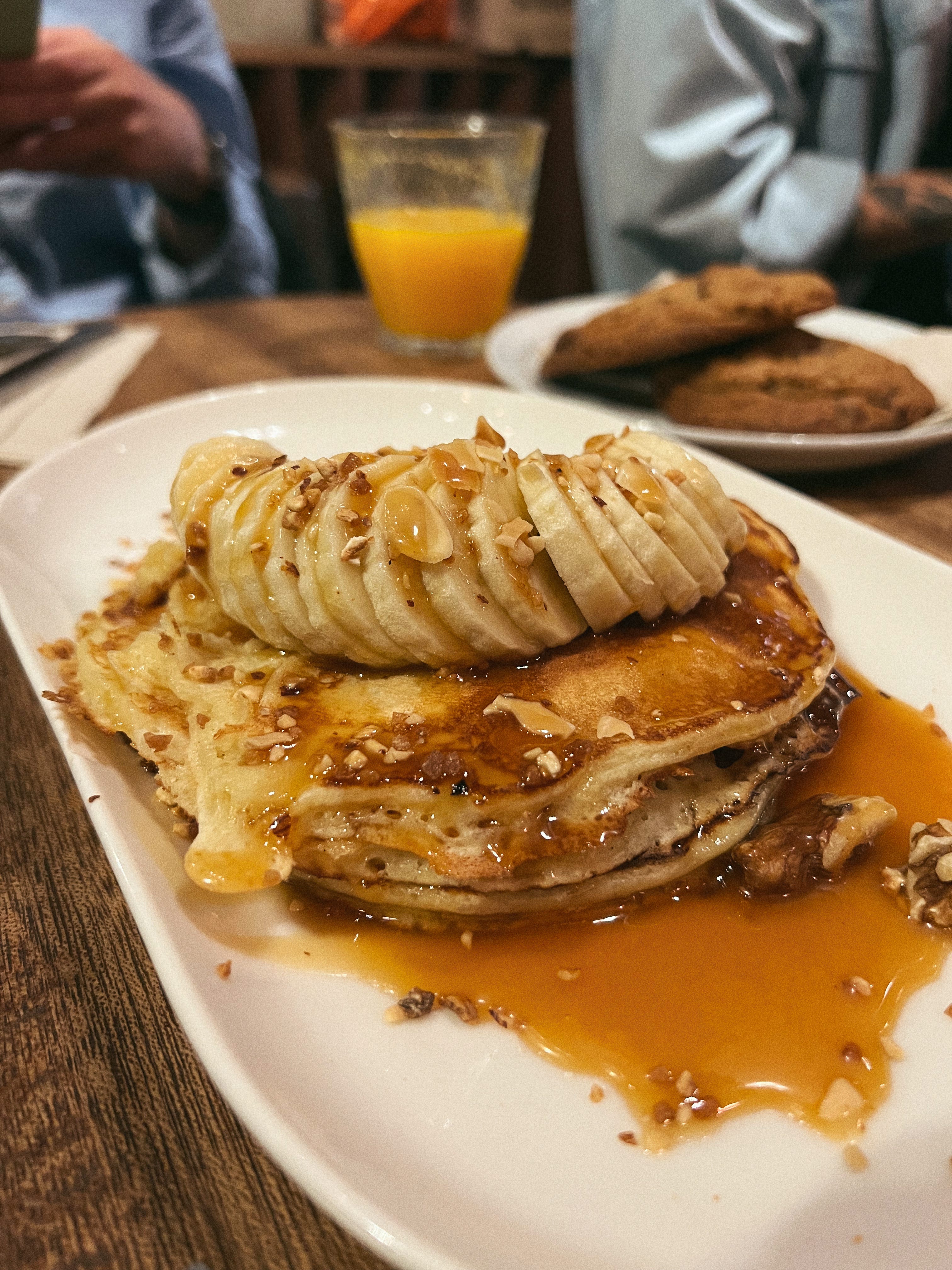
In this article: Why food tracking is a powerful learning tool, how it became an obsession for me, what actually happened when I deleted the app, and how to eat well without weighing every gram.
why tracking is actually useful (at first)
I want to be clear about this before I go any further. Tracking your food is not a bad thing. For a lot of people, it’s the single most eye-opening thing they can do when they start taking their nutrition seriously.
Most of us have no idea what we’re actually eating. We think we eat “healthy” or “enough protein” or “not that much,” but when you actually weigh your food and log it for a few weeks, the picture is usually very different from what you imagined.
Tracking taught me portion awareness and how to build a plate that actually supports my goals. It taught me that I needed to eat more, not less, if I wanted to build muscle. It gave me confidence because for the first time, I wasn’t guessing. I knew what I was eating, and I could see the connection between my nutrition and my results. That phase of learning was genuinely valuable, and I wouldn’t skip it if I had to start over.
But here’s the catch: if you don’t pay attention, what once was a tool becomes a cage.
The problem started slowly. So slowly that I didn’t notice it for a long time. At some point, tracking stopped being something I did to support my goals and became something I needed to do to feel safe. If I couldn’t log a meal, I felt anxious. Eating at a restaurant made me nervous because I couldn’t weigh the food. Going to a friend’s house for dinner became stressful because I had no idea what was in the dish. The thought of eating something I couldn’t quantify made me genuinely uncomfortable.
I was so focused on the numbers that I had stopped listening to my body entirely. I wasn’t eating because I was hungry. I was eating because my app told me I still had 30 grams of protein to hit. I wasn’t enjoying food anymore. I was managing it.
The irony is that I eventually started working with a nutritionist, which helped me tremendously. She built me a proper meal plan calculated for my goals, adjusted for my training schedule, with clear guidelines on portions and macros. It was exactly what I needed. But even with a professional telling me what to eat, I kept logging everything into the app. I had a plan made by a specialist, and I still couldn’t let go of the app. I needed to see the numbers. I needed that sense of control.
That’s when I realized this wasn’t about nutrition anymore. It was about anxiety.
you don’t need to track your food forever
About a year ago, I made the decision to stop tracking. Not gradually, not just for a week to see how it feels. I stopped.
I won’t pretend it was easy. The first few weeks felt strange, like leaving the house without my phone. I’d catch myself mentally calculating macros at every meal. I’d feel a little pull of guilt after eating something without logging it, as if I’d broken a rule. Old habits don’t disappear overnight.
But here’s what I noticed pretty quickly. My relationship with food started to shift and meals became simpler. I stopped agonizing over whether to have the bread or save those carbs for later. I started eating when I was hungry and stopping when I was full, instead of eating to hit a number. Dinner with friends went back to being about the company, not about silently trying to estimate the macros in a homemade pasta dish.
And the big question everyone asks: did my body change? Honestly, not really. My weight has stayed stable. My strength in the gym hasn’t dropped. My clothes fit the same way. After years of tracking, I had internalized enough knowledge about food and portions that I could navigate my nutrition without an app telling me what to do. And that’s the whole point. The tracking did its job. It taught me what I needed to know, and then it was time to move on.
It also helps that I’m currently in a maintenance phase. I’m not trying to lose fat or aggressively build muscle right now. My focus is on maintaining what I’ve built. Maintenance is more forgiving. You don’t need to be as precise as when you’re in a deficit or a surplus. There’s more room to go by feel, and that made the transition a lot easier.


how to eat well without tracking every gram
If you’ve been tracking for a while and you’re thinking about stepping away from it, you don’t have to go in blind. There are a few strategies that helped me keep my nutrition on track without opening an app.
learn to estimate with your hands
This is probably the simplest method out there, and it’s surprisingly accurate. Your hand is proportional to your body, so it scales naturally with your size. A palm-sized portion of protein (chicken, fish, meat) is roughly 20 to 30 grams of protein. A fist of carbs (rice, potatoes, pasta) is about one serving. A cupped hand of fats (nuts, cheese) is a reasonable portion. And a fist or two of vegetables is always a good idea.
You don’t need to be exact. The goal is to have a rough framework so you’re not completely winging it. Once you get used to eyeballing portions this way, it becomes second nature.
think in plates, not numbers
Instead of counting every macro, I started thinking in terms of structure. Every meal has a protein source, a carb source, and vegetables. That’s it. Sometimes there’s a fat source added in (avocado, olive oil, butter), sometimes the fat is already in the protein (salmon, eggs, meat). I don’t measure. I just make sure every plate has those three elements and that the protein portion looks substantial enough.
This approach is flexible enough to work whether you’re cooking at home, eating out, or grabbing something on the go. You’re not following a rigid plan. You’re following a principle.
do check-ins, not daily tracking
One thing I still do from time to time is track my food for a few days. Not as a habit, but as a check-in. Maybe once every couple of months, I’ll log everything for three or four days just to see where I’m at. Am I still getting enough protein? Have my portions drifted without me noticing? Is my overall intake roughly where it should be?
I also still weigh my protein and carbs, but only when it’s something harder to eyeball. If I’m having a steak or a grilled salmon fillet, or if I’m having toast as a source of carbs for breakfast, I don’t bother.
These short check-ins give me useful data without pulling me back into the daily tracking cycle. Think of it like stepping on the scale once in a while versus weighing yourself every morning. One gives you perspective. The other gives you anxiety.
trust the skills you already built
If you’ve been tracking consistently for months or years, you know more about food than you think. You know what a serving of oats looks like. You know roughly how much protein is in a chicken thigh versus a breast. You know that a tablespoon of peanut butter is not what most people put on their toast.
That knowledge doesn’t disappear when you close the app. It’s in you. The whole point of tracking was to build that awareness, and if you’ve done the work, you can trust it.
think of tracking as a learning phase
I still think tracking your food is one of the most useful things you can do when you’re starting to take nutrition seriously. It builds awareness, it removes guesswork, and it gives you a foundation of knowledge that stays with you long after you stop. I wouldn’t be where I am today without those years of logging every meal.
But it was never meant to be forever. At least not for me.
If you’re currently tracking and it feels fine, keep going. If it’s helping you reach your goals without causing stress, there’s no reason to stop. But if you’ve started to notice that the app controls you more than you control it, if eating untracked food makes you anxious, if you can’t enjoy a meal without logging it first, then maybe it’s time to ask yourself whether tracking is still serving you or just holding you hostage.
You spent all that time learning about food for a reason. At some point, you have to trust that you learned enough. 🧚🏻♀️💜