


Everyone has an opinion about protein. The official recommendation from health organizations is 0.8 grams per kilogram of body weight — which sounds super official and scientific. But then you scroll through Instagram and every fitness influencer is basically telling you that if your cookie doesn’t have 20 grams of protein, you’re doing life wrong.
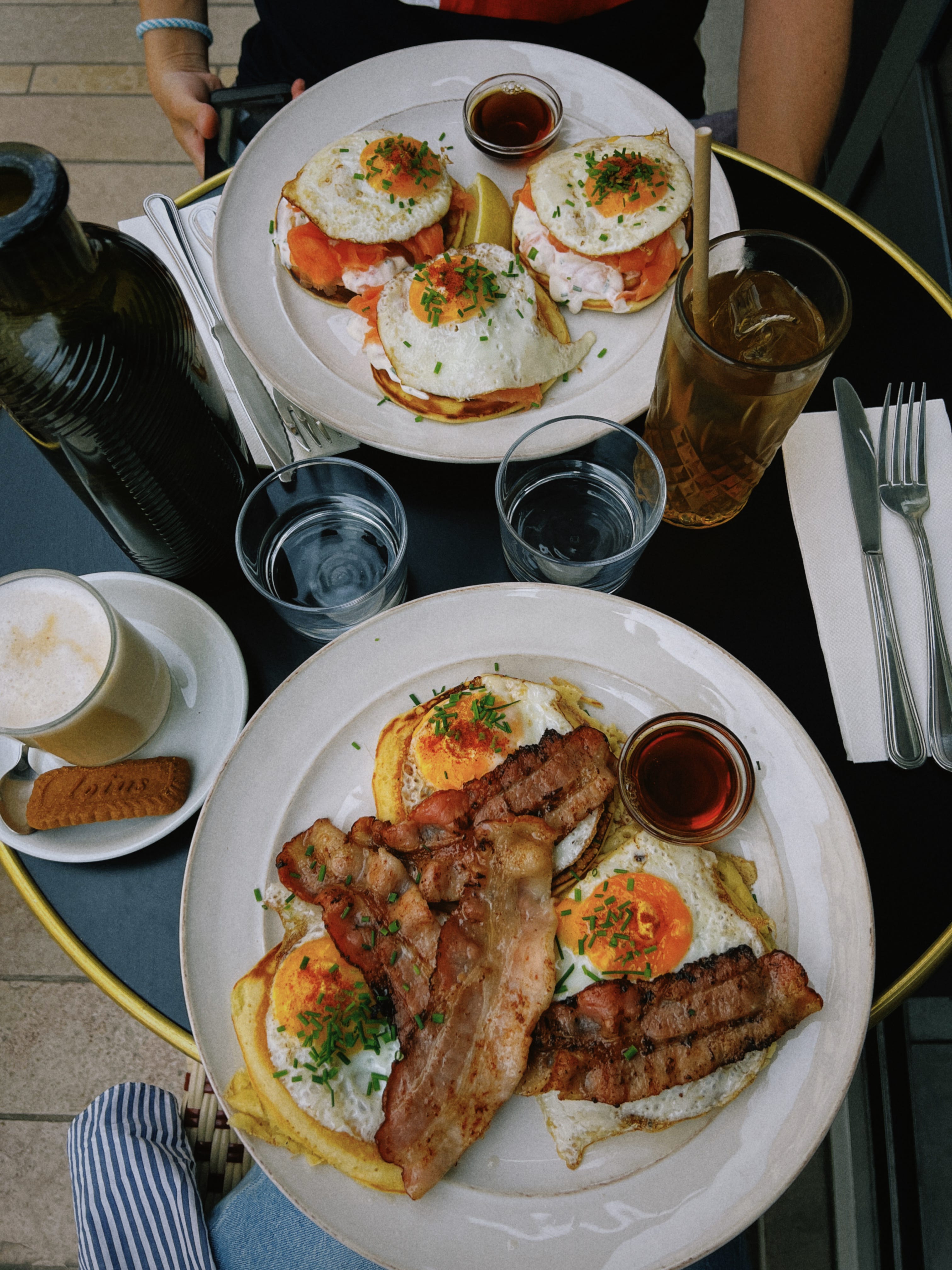
Solid research shows that the “ideal” amount of protein depends on several factors: your activity level, your age, your current body composition, and most importantly, your goals. It’s not one-size-fits-all, and that’s actually good news because it means you can personalize your approach.
My goal with this article is simple: give you clear, no-BS benchmarks for protein intake (without making you feel like you need a nutrition degree), plus practical strategies that actually work for women who want to build muscle.
how muscle grows and why protein is non-negotiable
For the longest time, I wasn’t seeing any progress in the gym. Like, zero. I was showing up, doing the work, lifting consistently... and nothing. My muscles weren’t growing, I wasn’t getting stronger, and honestly, I was getting pretty frustrated.
Turns out, I wasn’t eating enough protein. Actually, I wasn’t eating enough, period.
Here’s what’s happening in your body when you’re trying to build muscle: every time you lift weights, you’re creating tiny tears in your muscle fibers. This process is called hypertrophy, and it’s actually what you want. Your body then repairs these micro-tears, and in doing so, makes the muscle fibers bigger and stronger. That’s muscle growth.
The catch is that muscle protein synthesis requires amino acids, which come from... you guessed it, protein. If you’re not giving your body enough protein, it simply can’t repair and build muscle efficiently, no matter how hard you train.
And there’s more. Protein isn’t just about building muscle. It’s absolutely crucial for recovery. More protein means better recovery, which means you can train harder and more frequently, which means better progress. It’s this beautiful cycle that only works if you’re fueling your body properly.
When I finally started eating enough protein (and enough food in general), everything changed. Suddenly, I could actually see muscle definition. I was getting stronger and my recovery was faster. I was finally giving my body what it needed to do the work I was asking it to do.
okay, so how much protein do i actually need?
Here’s where it gets personal, because the “ideal” amount truly depends on your goals and your current body composition. Let me break it down in a way that’s actually useful:
If you’re maintaining your current weight and training regularly: aim for about 1.2 to 1.7 grams per kilogram of body weight. If you weigh 65 kg (about 143 lbs), that’s roughly 78 to 110 grams of protein per day. This keeps your muscles happy and supports your training without going overboard.
If you’re trying to lose fat while preserving muscle: this is where you want to be on the higher end, around 1.6 to 2.0 grams per kilogram. Why? Because when you’re in a calorie deficit, your body is more likely to break down muscle for energy. Higher protein intake protects that hard-earned muscle while you shed fat. For our 65 kg person, that’s 104 to 130 grams daily.
If you’re focused on gaining muscle (in a slight calorie surplus): research shows that 1.6 grams per kilogram is the sweet spot for maximizing muscle growth, though you can go up to 2.2 g/kg if you’re training really intensely. Beyond that, there aren’t really additional benefits. So for 65 kg, you’re looking at 104 to 143 grams per day.
If you’re over 40: once you reach your 40s and 50s, your body becomes less responsive to protein (a phenomenon called “anabolic resistance”). To keep your muscles healthy and prevent age-related loss, experts recommend at least 1.2 grams of protein per kilogram of bodyweight per day.
All that being said, I don’t want to overcomplicate it for you, so if you are a normal, somewhat active person, you can keep your intake around 1.2 to 2.0 g/kg. It will allow you to see muscle growth and be healthier.
The key thing to remember is: aim for at least 30 grams of protein per meal, and spread your total intake throughout the day rather than loading it all into dinner. Your body can only use so much protein at once for muscle building, so spacing it out is way more effective.
how to eat enough protein without losing your mind
Alright, theory is great and all, but let’s talk about real life. Here are the strategies that actually work:
Start with breakfast. Aim for at least 30 grams of protein in your first meal. This isn’t just about hitting your protein goal — it sets you up for better appetite control and energy throughout the day.
Think in portions, not grams. A palm-sized portion of protein-rich food (chicken, fish, tofu, etc.) is roughly 25-30 grams of protein. Aim for one at each meal, and suddenly you’re at 75-90 grams without even trying that hard.
Don’t sleep on plant proteins. Beans, lentils, chickpeas, quinoa, nuts — they all count. You don’t need to eat chicken breast for every meal. Variety is actually better because different protein sources come with different nutrients.
Protein at every snack. Greek yogurt, cottage cheese, a protein shake, eggs. Keep these on rotation and you’ll easily add another 20-30 grams to your daily total.
Prep makes perfect. I know, meal prep sounds tedious. But honestly? Cook a big batch of protein on Sunday (chicken thighs, ground turkey, a tray of tofu, whatever), and you’ve just eliminated the biggest barrier to hitting your protein goals all week.
I explained how I approach meal prep in this article:

three delicious high-protein breakfasts that are ridiculously easy
Listen, I’m not here to give you complicated recipes that require 47 ingredients and a culinary degree. These breakfasts are simple, fast, and they get the job done. I make them all the time, and they’re genuinely delicious.
1. scrambled eggs with cheese & toasted bagel
This is my go-to when I have a bit more time in the morning. It’s comforting, filling, and hits that protein target beautifully.
ingredients:
1 bagel
2 eggs
20 g shredded or sliced cheese
30 g low-fat cottage cheese
Seasoning (salt, pepper, herbs — whatever you’re feeling)
How to make it
Heat a pan with a tiny bit of olive oil or cooking spray. Crack your eggs directly into the pan and scramble them with a spatula. Once they’re almost done, add the cheese on top, cover the pan, and let it melt on low heat for like 30 seconds.
Toast your bagel while the eggs are cooking. Spread the cottage cheese on the toasted bagel, top with your cheesy scrambled eggs, and season however you want. I usually throw on some everything bagel seasoning because I’m basic like that.
Pro tip: I always add a bowl of fresh fruit on the side (for micronutrients) and a latte or black coffee. Makes it feel like a proper breakfast.
The stats: ~520 calories | 33g protein | 58g carbs | 18.5g fat
2. cheese sandwich + protein iced latte (for when you’re running late)
This one is clutch for busy mornings. You can literally make it in 10 minutes, and it tastes way better than it has any right to.
ingredients:
For the sandwich:
2 slices sourdough bread
1 slice cheese
30 g low-fat cottage cheese
Seasoning to taste
For the latte:
200 ml skimmed or semi-skimmed milk
20 g whey protein (vanilla or neutral flavor)
2 espresso shots (or 1-2 tsp instant coffee)
Ice cubes
how to make it
Sandwich: Spread the cottage cheese on one slice of bread, add your cheese slice, season it up, close the sandwich. Throw it in the oven or air fryer at 180°C for 8 minutes. It comes out crispy and melty and perfect.
Latte: While the sandwich is cooking, throw milk, whey, and ice in a shaker or blender. Shake or blend it up. Pour into a glass, add your espresso shots, and boom — protein coffee.
Pro tip: If you’re using instant coffee, just shake everything together in the shaker. Even faster, and honestly? It’s still really good.
The stats: ~465 calories | 43g protein | 53g carbs | 10g fat
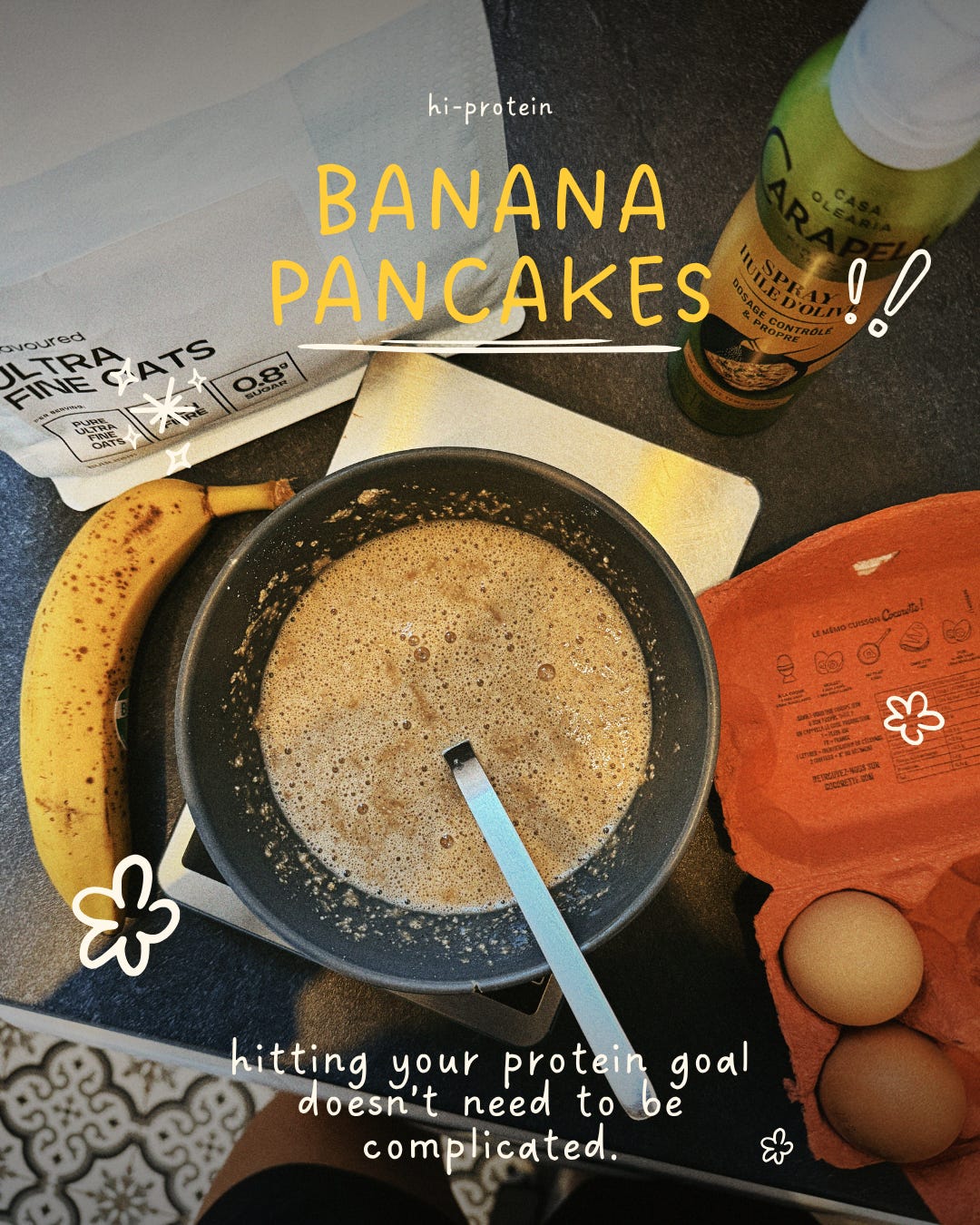
3. banana pancakes (for weekend vibes)
These are weirdly good and feel like a treat even though they’re basically just bananas and eggs with extra protein. Make them on weekends or whenever you want breakfast to feel special.
ingredients:
30 g oats
2 eggs
1 mashed banana
Cinnamon (be generous)
Vanilla extract (a few drops)
Stevia (optional, if you like it sweeter)
15 g skim or semi-skim milk powder
15 g whey protein (any flavor you like)
how to make it
Mash your banana in a bowl. Add oats, eggs, cinnamon, and vanilla extract. Mix it all together until it’s a batter. Don’t add the whey and milk powder yet — that’s for the topping.
Heat a pan with a little oil and make small pancakes with the batter. They cook fast, so keep an eye on them.
While they’re cooking, mix the whey protein and milk powder in another bowl. Add water slowly until you get a thick, creamy consistency. This is your protein “cream” topping.
Stack your pancakes, pour the whey cream on top. Add banana slices, berries, more cinnamon — whatever makes you happy.
Pro tip: These are great meal-prepped too. Make a big batch, store them in the fridge, and just reheat in the toaster. Easy weekday breakfast sorted.
The stats: ~470 calories | 35.5g protein | 56g carbs | 13g fat
let’s wrap this up
Here’s what you need to remember:
Protein is essential for building muscle.
Women who lift need more than the basic recommendations — somewhere between 1.2 to 2.0 grams per kilogram of body weight, depending on your goals.
But what I really want you to hear is that hitting your protein goal doesn't have to be complicated. You don’t need to eat chicken breast seven times a day. You don’t need expensive supplements (though whey protein is convenient, not gonna lie). You definitely don’t need to stress about every single gram.
Just focus on getting a good protein source at each meal, starting your day with 30+ grams at breakfast, and choosing whole foods whenever possible. The recipes above are just examples. Find what works for you, what you actually enjoy eating, and build from there.
Because at the end of the day, the best nutrition plan is the one you can stick to. And muscle-building takes time. Be patient with yourself, fuel your body properly, and trust the process.
Now go make those pancakes.
Thanks for this!! I’m 32 and finally getting serious about building muscle and thinking about longevity. Your writing has been “fueling” me in a different way ;)
Love your recipes! I tried this protein ice coffee in the past and it’s really good